
Technical Portal for Sustainable Architecture


Ceramic Ventilated Facades: Engineering and Aesthetic Performance
Porcelain stoneware solutions for energy requalification and high asset value
At VM Group, we don't view ventilated facades as simple cladding, but as a complex technological system where each component must work in perfect symbiosis. With over 30 years of experience in the sector, we have transformed building envelope design into a precision discipline, where the choice of material is merely the starting point for a custom-engineered solution.
Our philosophy is based on the complete integration of high-quality materials, such as porcelain stoneware, natural stone, HPL, and photovoltaic solutions, with advanced anchoring systems. Thanks to the use of cutting-edge technologies such as 3D laser scanning, we eliminate the friction between the architectural vision and the construction site, ensuring pinpoint installation and strict adherence to schedules.
In this section, we explore the inseparable combination of high-quality finishes and the substructures that guarantee safety, durability, and thermal performance.
Ventilated Facades in Natural Stone and Stone Materials
Ventilated Facades in Terracotta and Extruded Terracotta
Ventilated Facades in Extruded Stoneware
Ventilated Facades in Large-Scale Technical Ceramics
Ventilated Facades in Metallic Materials and Advanced Alloys
Ventilated Facades in HPL – High-Pressure Laminates
Natural Stone and Stone Materials
Timeless elegance supported by cutting-edge structural design.

Rimini Courthouse - Navona Travertine and Sunshade Systems
The allure of natural stone—marble, granite, travertine, and fine stone—represents the ultimate aesthetic expression of the building envelope. At VM Group, we integrate these traditional materials into technological systems that guarantee maximum safety and durability.
Thanks to our thirty years of experience, we go beyond simply supplying the material; we also engineer the façade system to manage the static loads and dynamic stresses (wind and seismic) typical of heavy materials. Using a 3D laser scanner, we map the existing structure to design a substructure with pinpoint accuracy, eliminating unexpected issues during installation.
Fastening Systems:
-
Concealed anchors: We use stainless steel brackets and aluminum profiles that fit within the thickness of the slab (Kerf or undercut systems), leaving the stone surface free from visual interruptions.
-
Exposed systems: For jobs requiring maximum operational speed, we offer certified stainless steel clips, calibrated for the specific weight of each individual stone type.
Extruded Terracotta and Terracotta
The warmth of tradition integrated into highly efficient technological systems.
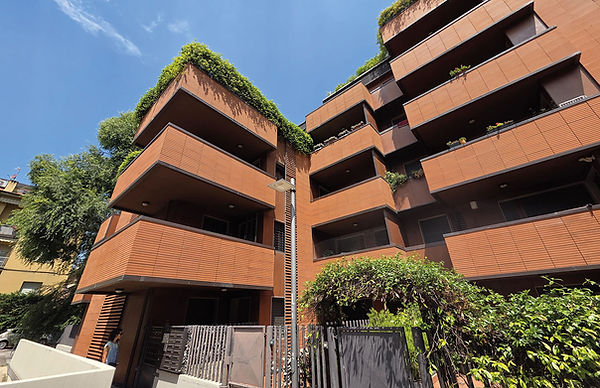
Condominium Redevelopment in Bologna: Synergy between Cotto and Parklex
Terracotta represents an excellent choice for projects seeking a harmonious dialogue with the urban or natural context. At VM Group, we bring this ancient material into the future of construction, treating it as a precision engineering element. Our expertise allows us to manage the dimensional variations typical of the natural material, transforming them into an aesthetic highlight supported by absolute structural stability.
Designing a terracotta façade requires a thorough understanding of freeze-thaw cycles and the breathability of the envelope. Thanks to our preliminary 3D laser scanning surveys, we define the structural mesh so that each terracotta element is perfectly aligned, ensuring optimal airflow in the ventilation chamber.
Fastening Systems:
-
Interlocking rail systems: We use horizontal extruded aluminum profiles that fit into the grooves of the terracotta piece. This system allows for extremely tidy installation and the ability to replace individual elements if necessary.
-
Fixing with invisible clips: For special sizes or slats, we use stainless steel brackets that remain hidden by the joints, ensuring that the texture and natural color of the terracotta are the only protagonists of the facade.
Large-Format Technical Ceramics
Seamless, high-performance surfaces for uncompromising architectural design.

FAO Rome Multi-Storey Car Park: Laminam ceramic and Mapei adhesive fixing
Large-format ceramic slabs have revolutionized the aesthetics of ventilated facades, allowing for seamless surfaces with minimal joints. At VM Group, we select only ultra-high-density porcelain stoneware, capable of withstanding thermal shock and the most aggressive weather conditions, maintaining its original appearance for decades.
The technical challenge of these materials lies in their handling: handling and installing slabs exceeding 3 meters requires specific skills and dedicated equipment. Thanks to our 3D laser scanning approach, we design the substructure to accommodate the slabs with millimeter-level tolerance, ensuring perfect flatness even on surfaces spanning thousands of square meters.
Fastening Systems:
-
Concealed systems (Kerf/Undercut): Ideal for large-format slabs, these involve milling on the back or in the thickness of the slab where mechanical hooks are inserted. The result is a "clean" facade where the material's design is the sole protagonist.
-
Chemical-Mechanical Fixing: A hybrid system that combines the security of mechanical fixing with the stability of structural bonding, ideal for reducing vibrations and improving the response of the façade package to wind stress.
Metallic Materials and Advanced Alloys
Hi-tech solutions for contemporary architecture: dynamism, lightness, and protection.

Lecce Hospital: Ceramic and Composite Aluminum
The use of metals such as aluminum, stainless steel, copper, and titanium zinc allows for the creation of visually striking envelopes with exceptional reflective and protective properties. At VM Group, we manage the complexity of metal cladding, considering every critical variable, such as thermal expansion and electrolytic compatibility between the various components.
Thanks to our thirty years of experience, we are able to transform raw sheets, composite panels, or expanded mesh into a perfect architectural skin. The use of 3D laser scanning becomes essential here to map the volumes and ensure that each metal panel fits perfectly into the structural mesh, minimizing waste and ensuring impeccable flatness even on large formats.
Fastening Systems:
-
Cassette Systems (Bolt-on / Hook-on): These involve shaping the panel edges for attachment to specific brackets, offering a three-dimensional façade with completely concealed fastenings.
-
Riveting or visible screws in matching color: For a more industrial aesthetic or for flat panels, we use mechanical fastening systems with heads painted in the same color as the cladding (company orange or any RAL color), ensuring visual continuity and maximum resistance to wind loads.
HPL – High Pressure Laminates
Maximum freedom of expression and extreme resistance for facades with a contemporary design.

Ferrara: Luxury Private Residences with Advanced Design and Ventilated HPL Facades
HPL panels represent one of the most versatile solutions for modern architecture, offering a virtually infinite range of finishes, from solid colors to textured finishes. At VM Group, we treat HPL not only as an aesthetic element, but as a technical material that requires in-depth knowledge of structural settlement dynamics.
Thanks to our 30 years of experience, we design systems that take into account the material's hygroscopic nature, ensuring each panel can move correctly without compromising the façade's flatness. The integration of a 3D laser scanner into our workflow allows us to calculate fixed and sliding fixing points with absolute precision, ensuring a perfect seal over time.
Fastening Systems:
-
Fixing with matching rivets or screws: We use mechanical systems with heads painted in the same color as the panels, ensuring a subtle visual impact and certified structural safety.
-
Concealed systems with inserts: For high-profile projects, we use fastening systems on the back of the panel via mechanical inserts that remain completely invisible, enhancing the clean lines of the cladding.
Ecological Fiber Cement
Textured surfaces and natural performance for sustainable and long-lasting architecture.

Equitone Fiber Cement Ventilated Facade: - Visible Fixing with Rivets
Fiber cement represents the perfect balance between naturalness and technology. It is a highly prized material for its authentic texture and high resistance to fire and weathering. At VM Group, we enhance the mineral nature of these panels by applying rigorous installation standards that preserve their characteristics over the long term.
With thirty years of experience, we know that the secret of a fiber cement facade lies in the meticulous management of joints and edge protection. Through 3D laser scanning, we are able to map the substructures with extreme accuracy, ensuring that every cut and hole are made with industrial precision, eliminating internal stresses within the material.
Fastening Systems:
-
Exposed mechanical fastening: We use specific screws or rivets with EPDM gaskets and colored heads to match the panel. This system guarantees maximum ventilation and certified structural stability even in extreme weather conditions.
-
Concealed mounting systems: For projects requiring absolute visual continuity, we integrate brackets on the back of the panels that attach to horizontal tracks, hiding all fastening elements and letting the material itself speak for itself.

